
Contact Us
Find out the disease and risks of pollution you may have been exposed! Fill out the form below for more environmental pollution information!


HOME POLLUTION - find out how you could be exposed to deadly polluted contaminants inside your home
WORKPLACE POLLUTION - it is illegal for companies and industries to expose you to polluted contaminants

SOIL POLLUTION - information about polluted soil and its effects on human health
AIR POLLUTION - air and gas contamination are the most dangerous form of pollution
WATER POLLUTION - health can be seriously affected by existing pollutants from the water we drink daily
RADIATION POLLUTION - information on the most common radiation contaminants
FOOD POLLUTION - also known as food intoxication, food pollution has severe consequences affecting your health
CHEMICAL POLLUTION - learn what happens when chemical waste is illegal or improperly disposed
Nitrobenzene May be Listed by California’s EPA as Known to Cause Reproductive Toxicity
California’s EPA (CalEPA) Office of Environmental Health Hazard Assessment (OEHHA) has issued a notice of intent to list nitrobenzene as a chemical known to cause reproductive toxicity (affecting particularly male reproductive system). March 1, 2010 marked the end of the public comment period related to this notice of intent.
Listing nitrobenzene as known to cause reproductive toxicity implies that the following 2 criteria are met:
- An authoritative body formally identifies the chemical as causing reproductive toxicity
- The evidence considered by the authoritative body meets the sufficiency criteria contained in the regulations
Background Information on Nitrobenzene and Its Toxicity
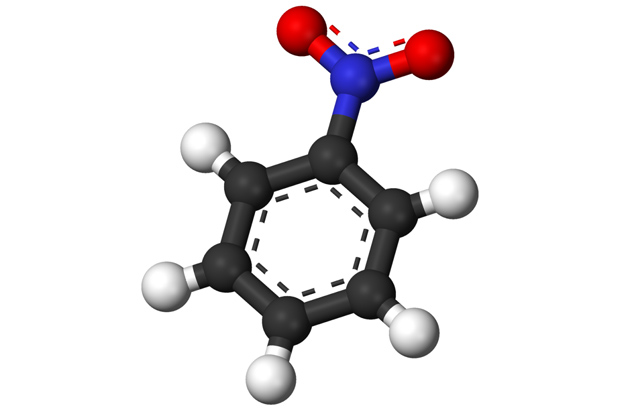
Nitrobenzene is a chemical (organic compound) used in chemical synthesis as a precursor to aniline (approx. 95% of nitrobenzene use). It is also occasionally used as a solvent and as flavor in perfume (it is oily and has an almond like odor). It also occurs in shoe and metal polishes and soaps. Some special industrial uses are also known (but accounting for a very small percent of nitrobenzene use).
In high amounts, nitrobenzene is known to be a chemical pollutant. People may get exposed to nitrobenzene mainly through skin absorption (since it readily absorbs through the skin) and through inhalation of its emitted vapors or fumes (since it is a volatile compound). Ingestion is another exposure pathway, although less common.
Until recently, toxicity of nitrobenzene to reproductive system was not pointed out (before this notice of intent). So far, nitrobenzene toxicity is linked to the following various health effects:
- damage to central nervous system (due to prolonged exposure)
- damage of liver or kidney
- irritation of lung
- anemia
- impaired vision
- some common health problems including: headache, dizziness, fatigue, nausea, weakness in the arms and legs – could be due to exposure to the fumes of nitrobenzene (through inhalation)
- increase health rate and convulsions – may be caused by skin absorption of nitrobenzene
- vomiting and gastrointestinal irritation may be caused by ingestion of nitrobenzene
In very rare cases prolonged exposure to nitrobenzene may be fatal.
SEARCH BY YOUR LOCATION
Sites with recognized pollution problems as well as sites with potential to generate pollution may be close to your home or workplace. Being aware of such locations will guide you in choosing your future home and evaluating your current exposure risk. Here is a list, organized by states, with the most common locations that could have affected you and your health. Please note that there could be sites that we have not yet find out about and you should contact us immediately for a better assistance.
Click here to find out if you are at risk based on your location?
- Air Pollution (2)
- Chemical Pollution (2)
- test pollution (1)
- Water Pollution (5)


