
Definition
Oil spills include any spill of crude oil or oil distilled products (e.g., gasoline, diesel fuels, jet fuels, kerosene, Stoddard solvent, hydraulic oils, lubricating oils) that can pollute the surface of the land, air, and water environments. Oil spill pollution may comprise a variety of amounts starting with one or more gallons of oil and up to millions or even hundreds of millions of gallons spilled. The term is usually associated with the oil spills in the ocean and coastal waters.
Oil Spill Pollution refers to the negative polluting effects that oil spills have on the environments and living organisms, including humans, due to the environmental discharge of various organic compounds that make up crude oil and oil distillate products, the majority of which include various individual hydrocarbons. Hydrocarbons are made exclusively from carbon and hydrogen atoms which bind together in various ways, resulting in paraffins (or normal alkanes), isoparaffins (isoalkanes), aromatics (such as benzene or various PAHs), cycloalkanes and unsaturated alkanes (alkenes and alkynes). Other individual compounds that are present in crude oil and oil discharges include (apart from carbon and hydrogen) sulfur, nitrogen and/or oxygen atoms.
The Oil Pollution Act
The Oil Spill Pollution Act - The Oil Pollution Act is an environmental regulation adopted in 1990 in the U.S. to prevent oil spill pollution. In 1990, the Oil Pollution Act was passed by U.S. Congress and amended the existing Clean Water Act, aiming to require oil storage facilities to prepare "Facility Response Plans". Various revisions to the Act have been made in 1994 by the EPA. The revised plan obliged facility owners and operators to prepare and submit plans addressing a "worst-case scenario" of oil discharge. This regulation was meant to prevent and prepare emergency responses to oil spills. The Oil Spill Pollution Act:
- established new requirements and amended the U.S. Federal Water Pollution Control Act in order to provide enhanced capabilities for oil spill response and natural resource damage assessment;
- required the Coast Guard to strengthen its regulations on oil tank vessels;
- included the specification that companies must have a cleanup plan in order to prevent spills that may occur and a detailed containment;
- imposed liability for injuries, removal costs, and damages from incidents involving the discharge of oil into navigable waters or adjoining shorelines.
How Does Oil Spill Pollution Affect Us?
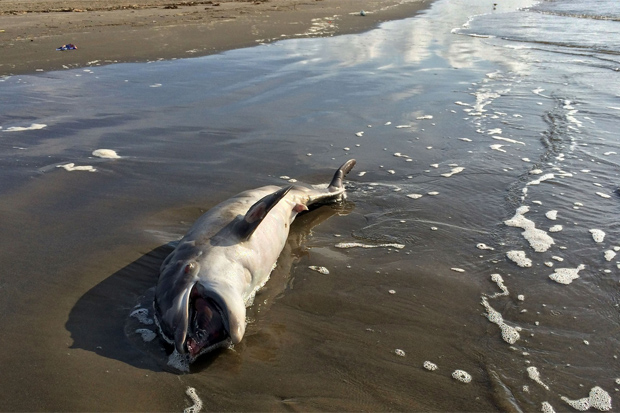
These organic compounds may affect the wildlife (including fish and birds) and humans in various ways:
Directly
- by direct contact with the skin - some of the oil components could be irritants to the skin and may also penetrate into our bodies via skin absorption
- through inhalation - many individual components of oil are volatile and thus may easily evaporate and while breathing can enter our bodies. Some less volatile compounds (such as PAHs) may adsorb on dust and other small particulate matter suspended in the breathing air and may get into our bodies through inhalation of small particulate matter from the air
- through ingestion of contaminated water and/or particles
- through emitted odors - How many of us have smelled gasoline or diesel/fuel oil and noticed the strong unpleasant smell? Usually, crude oil and its various distillates have strong unpleasant odor
Indirectly
- by consuming contaminated food (some of the oil hydrocarbons such as PAHs bioaccumulate in fish and other organisms and may concentrate many times more than in water or other media)
- by disrupting professional and/or recreational activities due to the oil pollution in certain areas
- by decreased property values from the affected areas - it is logical to imagine the drops in house values in a polluted area;
- aesthetically - by visual alteration of marine, beach and many other environments (where the oil spill occurred)
- overall economic impact - in the community affected by the oil spill
How Does an Oil Spill Behave in the Environment?
Depending on where and how an oil spill occurs, it will have distinct environmental effects. For example:
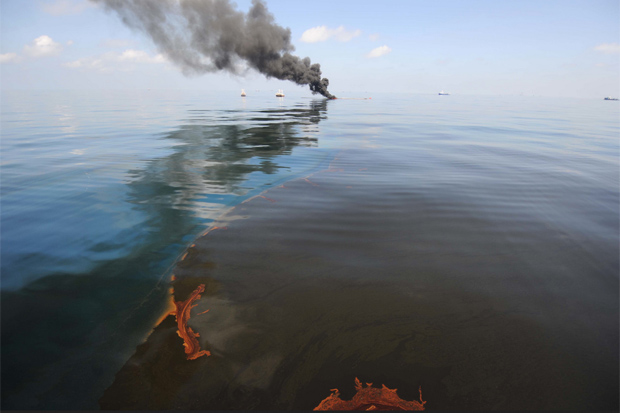
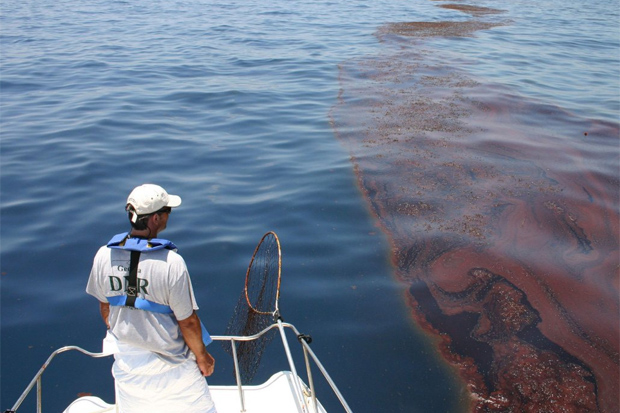
- a marine oil spill is usually degraded fast since water is an excellent medium for dispersion, emulsifying and microbial degradation processes. If released in the water, oil and oil products tend to accumulate at the surface of the water and float on the water. Small oil droplets may also form which may increase the surface contact with water and also the natural biodegradation of the spilled oil
- an oil spill on the land may penetrate underground and move downward reaching eventually the groundwater. However, such vertical movement may be slowed done if not prevented by the presence of paved surfaces, natural clay layers or other natural or anthropogenic barriers. Oil may also move laterally along less permeable layers (including surface pavements) or with groundwater and surface waters
- an oil spill in the underground (such as from pipelines or underground storage tank leaking) will likely affect the groundwater since the vertical traveling distance is reduced. Such spill may also result in oil residuals that could be entrapped underground constituting a secondary source of groundwater pollution